
A bench comprising Justices Sanjiv Khanna, M M Sundresh and Bela M Trivedi will hear the plea of jailed JMM leader at 10.30 am on Friday.

According to the cause list of July 10 uploaded on the apex court website, a five-judge bench headed by Chief Justice DY Chandrachud would consider in chambers the pleas seeking review of the October 17 last year verdict.

With the two appointments, the strength of the top court will rise to 28 with three vacancies.
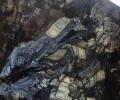
The Supreme Court of India has released an inquiry report into the alleged discovery of a large amount of cash at the residence of Delhi High Court judge Yashwant Varma. The report, which includes photos and videos, was uploaded on the court's website. Chief Justice of India Sanjiv Khanna has formed an in-house committee to investigate the matter and has asked the Delhi High Court Chief Justice to not assign any judicial work to Justice Varma. Justice Varma has denied the allegations, claiming they are part of a conspiracy to frame him. The inquiry report, submitted by the Delhi High Court Chief Justice, has been made public and calls for a deeper probe into the incident. The incident has raised concerns about judicial accountability and has prompted the Congress party to call for strong measures to uphold public trust in the judiciary.

Justice Bobde has decided several key cases and was part of the recent historic verdict that cleared the way for the construction of a Ram Temple at the disputed site in Ayodhya.
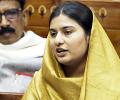
Samajwadi Party leader and Kairana MP Iqra Choudhary has moved the Supreme Court seeking effective implementation of the Places of Worship (Special Provisions) Act, 1991. This move comes amidst several petitions challenging the law's validity, including those filed by the Akhil Bhartiya Sant Samiti and lawyer Ashwini Upadhyay. The Supreme Court, in December 2022, had restrained all courts from examining fresh suits and passing interim orders in pending cases seeking to reclaim religious places. The Act aims to maintain the religious character of places of worship as they existed on August 15, 1947, but the dispute relating to Ram Janmabhoomi-Babri Masjid at Ayodhya was kept out of its purview. The court has listed Choudhary's plea with other pending pleas for February 17.

The Supreme Court of India has extended its stay on a court-monitored survey of the Shahi Idgah Mosque complex in Mathura, which is located adjacent to the Krishna Janmabhoomi temple. The court deferred the hearing on a plea against the survey to April 1, while the interim order staying the survey will continue to operate. The Hindu side claims that the mosque complex holds signs of a temple that once existed at the site, while the Muslim side contends that the lawsuits filed by the Hindu litigants violate the Places of Worship (Special Provisions) Act of 1991.

A voter's right to know is 'far too important' in democracy than the privacy of a donor, Supreme Court judge Justice Sanjiv Khanna said on Thursday as the apex court scrapped the 2018 electoral bond scheme for funding political parties.
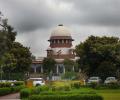
Commencing hearing on pleas challenging the constitutionality of the Places of Worship Act, 1991, the Supreme Court asked the Centre to reply to cross-pleas against or seeking implementation of statute.
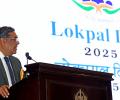
The Supreme Court of India will examine the jurisdiction of the Lokpal, India's anti-corruption ombudsman, in entertaining complaints against sitting high court judges. The court is considering a suo motu proceeding initiated over the Lokpal's January 27 order on the issue. The case involves two complaints filed against a sitting additional judge of a high court, alleging that he influenced a judge of the subordinate judiciary and a judge of the same high court set to deal with a suit filed against the complainant by a private company.
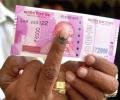
The electoral bonds scheme for funding political parties should not become a tool for "legitimisation of quid pro quo" between power centres and people who are benefactors of that power, the Supreme Court said on Thursday as it underscored the need for reducing the cash component in the electoral process.
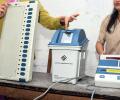
The Supreme Court of India has sought a response from the Election Commission of India (ECI) regarding pleas seeking verification of burnt memory and symbol loading units in Electronic Voting Machines (EVMs). The court directed the ECI to refrain from erasing or reloading data during the verification process and to explain the procedure adopted for verification. The bench also expressed concerns over the high cost of verification and directed the ECI to reduce the fee. The court's directive comes following its previous judgement where it allowed aggrieved candidates to seek verification of EVMs.

The State Bank of India, which unsuccessfully sought extension of time till June 30 to disclose the details of electoral bonds, on Monday faced searching questions from the Supreme Court which wanted to know about the steps taken to comply with the directions it had issued while scrapping the controversial scheme of anonymous political funding on February 15.
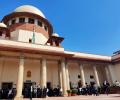
A five-judge bench headed by Chief Justice DY Chandrachud considered the pleas in chambers and dismissed applications for listing of the review petition in open Court.

'Not providing a copy to the complainant while holding her complaint to be unfounded would be a violation of the principles of natural justice and a complete travesty of justice'
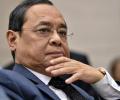
During the hearing in CJI's court No 1, an unfazed Justice Gogoi said the allegations are unbelievable.

The bench asked senior advocate Vikas Singh, appearing for Congress leader Jaya Thakur, who sought a stay on the new law, to serve a copy of the petition to the Centre's counsel.

Justice Bobde also raised concern about common people and their ability to access the independent and affordable advocacy in view of the fact that lawyers charge exorbitant professional fees and asked the Bar to ponder over this issue.
A notice by the office of Supreme Court Secretary General also said that the report of the committee constituted as part of the in-house procedure is not liable to be made public.

Justice Gogoi, the 46th CJI and the first from a north-eastern state, said it was not the requirement of the Supreme Court that judges 'reach out to our citizenry through the press'.
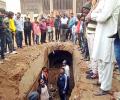
The Supreme Court of India has ordered a status quo on a private well located near the entrance of the Sambhal Jama Masjid, prohibiting any action regarding the well without its permission. The order came in response to a plea by the mosque's management committee, which challenged a lower court order that allowed a survey of the mosque, citing concerns over violence and loss of life during previous surveys. The court also instructed the authorities to file a status report within two weeks.
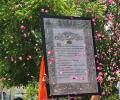
The Supreme Court on Friday observed the 1976 amendment to the Constitution adding terms 'socialist', 'secular' and 'integrity' to the Preamble underwent judicial reviews and it cannot say whatever Parliament did during the emergency period was all nullity.

The Supreme Court on Wednesday expunged the observations made by a single judge bench of the Punjab and Haryana high court against the apex court in a contempt case, saying they were "scandalous" and "unwarranted".
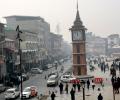
Highlights of the judgment pronounced by a five-judge Constitution bench of the Supreme Court that on Monday unanimously upheld the Centre's decision to abrogate provisions of Article 370 of the Constitution bestowing special status on the erstwhile state of Jammu and Kashmir.
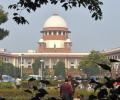
In a viral video of the court proceedings, the judge was seen reprimanding a woman lawyer on Thursday and reportedly made some objectionable comments.
A four-member team from the Archaeological Survey of India (ASI) conducted a survey of the recently-discovered Shri Kartik Mahadev temple, five pilgrimage sites, and 19 wells in Sambhal, Uttar Pradesh, India. The survey followed the discovery of three damaged idols inside a well of the Bhasma Shankar temple, which was reopened after being shut for 46 years. The Shri Kartik Mahadev temple, also known as the Bhasma Shankar temple, was reopened on December 13 after authorities found the covered structure during an anti-encroachment drive. The temple houses an idol of Lord Hanuman and a Shivling and had remained locked since 1978. The district administration has requested carbon dating of the temple, including the well, from the ASI. Meanwhile, the Supreme Court has restrained courts across India from entertaining new lawsuits or passing any orders in pending ones seeking to reclaim religious places, especially mosques and dargahs, until further notice. This action halts proceedings in approximately 18 lawsuits filed by Hindu parties seeking surveys to determine the original religious character of 10 mosques, including the Gyanvapi at Varanasi, the Shahi Idgah Masjid at Mathura, and the Shahi Jama Masjid at Sambhal, where four individuals died in clashes. The Supreme Court will examine the legality, scope, and boundaries of the Places of Worship (Special Provisions) Act, 1991, which prohibits the conversion of places of worship and ensures the preservation of their religious character as it existed on August 15, 1947.
A bench of justices Sanjiv Khanna, Dipankar Datta and Augustine George Masih told the petitioners, who pointed out that a meeting for the selection of ECs was pre-poned, to file a separate application pointing out the fact.

Democracy does not begin and end with elections and the integrity of election process is pivotal for sustaining the democratic form of government, the Supreme Court said on Thursday while striking down as unconstitutional the electoral bonds scheme for political funding.

Chastising the State Bank of India, the Supreme Court on Monday ordered it to disclose the details of the electoral bonds encashed by political parties to the Election Commission by the close of the business hours on March 12 and warned the country's largest public sector lender that the court may proceed against it for 'wilful disobedience' if it failed to comply with its directions and deadlines.

The bench said it will take up the matter for hearing on Thursday.

The West Bengal government approached the Supreme Court for a second time on Wednesday seeking urgent listing of its petition challenging a Calcutta high court order for transferring to the Central Bureau of Investigation (CBI) the probe into the January 5 attack on an Enforcement Directorate (ED) team in Sandeshkhali but failed to elicit prompt relief.
One of the most important cases which have political implications is the Ayodhya land dispute case.

Article 370 of the Constitution, which bestowed special status on the erstwhile state of Jammu and Kashmir, was a 'temporary provision' and any interpretation of the provision cannot postulate that integration of J-K with India was temporary, the Supreme Court ruled on Monday.

It is crucial to electoral democracy that the exercise of freedom to vote is not subject to undue influence, the Supreme Court said on Thursday while striking down as unconstitutional the electoral bonds scheme for political funding.
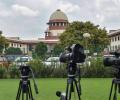
The order will be passed by a five-judge Constitution bench of Chief Justice Ranjan Gogoi, Justices NV Ramana, DY Chandrachud, Deepak Gupta and Sanjiv Khanna on a petition filed by a Supreme Court Secretary-General challenging the January 2010 judgment of the Delhi high court.

In an emphatic victory for the Modi government, the Supreme Court on Monday unanimously upheld its decision to abrogate Article 370 of the Constitution that bestowed special status upon the erstwhile state of Jammu and Kashmir, ordered restoration of statehood "at the earliest" and set a September 30, 2024, deadline for holding the assembly elections.

On February 1, grappling with the intractable issue of the AMU's minority status, the top court said the 1981 amendment to the AMU Act, which effectively accorded it a minority status, only did a "half-hearted job" and did not restore the institution the position it had prior to 1951.

The Supreme Court on Wednesday said it will not restrain the trial court from dealing with a plea seeking police custody of former Andhra Pradesh chief minister and TDP leader N Chandrababu Naidu as it announced a new bench will hear his petition for quashing the FIR in the alleged Rs 371 crore scam in the state's Skill Development Corporation on October 3.

Not ordering disclosure of details of electoral bonds prior to April 12, 2019, was a "conscious choice" by the Constitution bench, the Supreme Court said on Monday while refusing to entertain the submissions of ASSOCHAM and CII against the disclosure of bond details on the ground of their plea not being listed.

A five-judge constitution bench headed by Chief Justice D Y Chandrachud said there is "no manner of doubt" that the SBI is required to disclose complete details of the bonds.
